Live shows
A wireless video wall for live performance
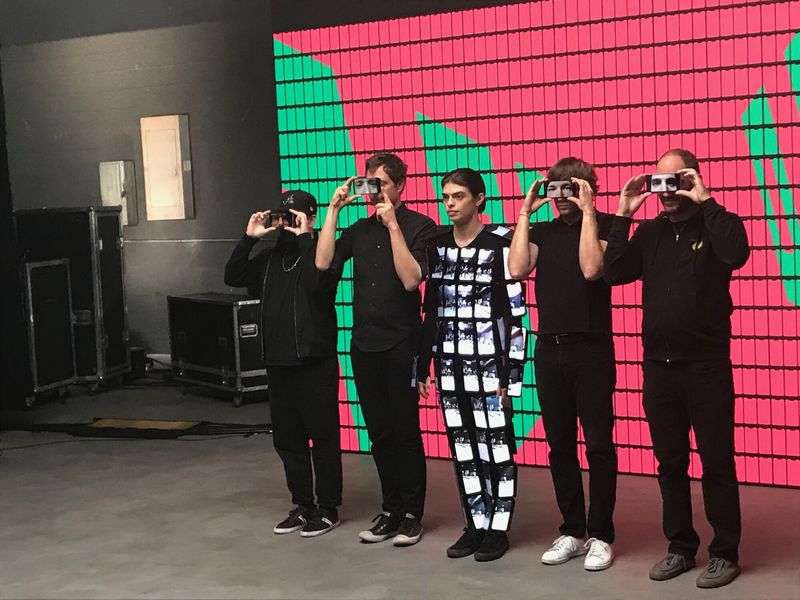
Identical iPads or phones, carried by performers or set up in a grid, playing as one timecode-locked display over Wi-Fi. I run it. The production or a rental house supplies the devices.
Credits
These shows ran on the first version of the software, which my dad and I built for Control Freak. The current version is a rebuild from 2026.
-
2011
American Music Awards
will.i.am, T.H.E. (The Hardest Ever), with Jennifer Lopez and Mick Jagger.
Los Angeles. iPads.
Full performance on YouTube (fan upload) (opens in a new tab)
-
2011
Mnet Asian Music Awards
will.i.am, T.H.E. (The Hardest Ever).
Singapore. iPads.
Full performance on YouTube (fan upload) (opens in a new tab)
-
2012
Corporate event
Hotel event, iPads.
Phoenix.
-
2013
Kia, North American International Auto Show
A grid of iPads on the stand, and dancers carrying them for the reveal.
Detroit. iPads.
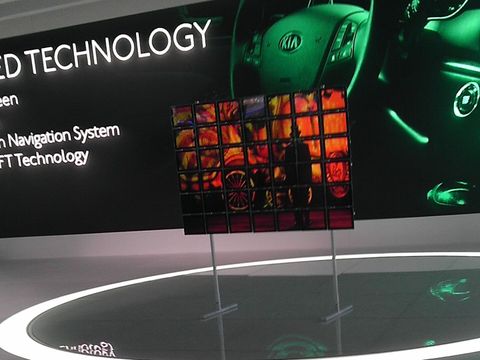
The wall on the stand, the day before the show. Rehearsal. Muted, plays on tap. -
2018
Asus ZenFone 5 commercial
Synchronized Android phones on set, and one suit made out of them.
Android phones.
The finished spot on YouTube (opens in a new tab)
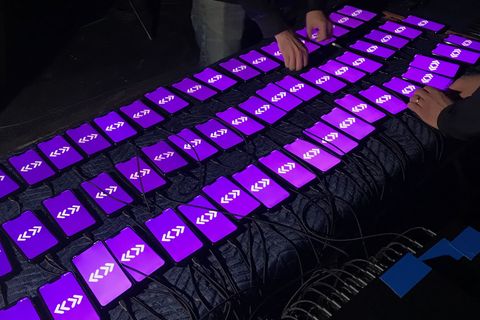
Phones going out. 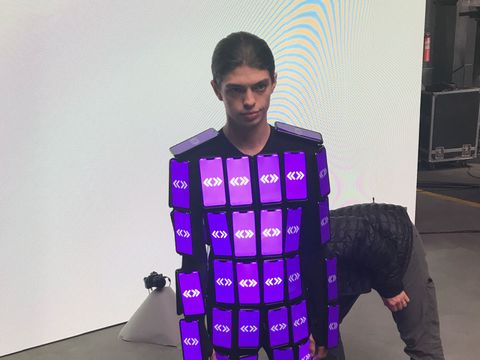
The suit. 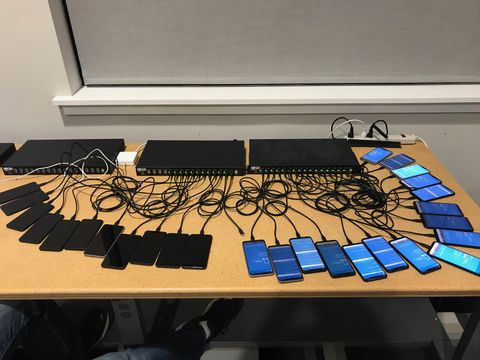
Charging between runs.
How it works
As of August 2026. The list only claims what has been built and measured on hardware.
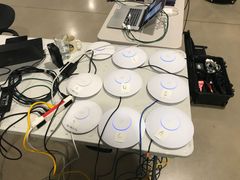
A Mac at front of house is the clock master and the single source of show state. Each device carries the entire show and works out what to draw from the synced clock and a small state blob that's repeated, not requested. A lost packet changes nothing.
- Every device holds the whole show and draws from a synced clock, so no message has to arrive for a cue to land.
- Clock sync runs over ordinary Wi-Fi. Measured across an iPad and an iPhone on one access point: 0 to 1 frame apart after a 20 minute run.
- If the hub drops, the devices keep playing on their own disciplined clocks. A hub outage is not a show stop.
- A Mac runs a virtual wall of N devices, so a show can be rehearsed before a single tablet is in the room.
In development
- Chases LTC timecode from the show clock, with MTC to follow.
- Named layouts and looks with bezel compensation, switched from the hub or the timeline.
- A hub dashboard showing battery, charging, content, and sync state for every device.
- Show control over OSC and HTTP, so Companion or a console can fire cues.
Rider
What a production provides.
- Identical devices in the count the design calls for, plus a few spares, on the same OS version.
- A dedicated Wi-Fi network for the devices with nothing else on it, or an access point I bring, and a wired drop for the hub at front of house.
- A timecode feed from playback, or a cue list if the show is called by hand.
- One master at the wall's full canvas size. It's cut into a tile per device and loaded over Wi-Fi, tens of gigabytes for a large wall, so it needs to arrive ahead of load-in.
- Load-in with every device on the show network before the first run: content transfer, a sync check, and a pass against playback.
- Charging between runs. A show runs on battery.
- A position at front of house for the hub Mac, and one operator, which is me.
Contact
Rates on request. I'm based in Sacramento, California, and travel for shows.